Cheap Joy
On the pleasures of a happy assignment

This week, I published a story I’ve been working on since the end of last year, a profile of the film director Mira Nair (Mississippi Masala; Monsoon Wedding; Salaam Bombay!; The Namesake).
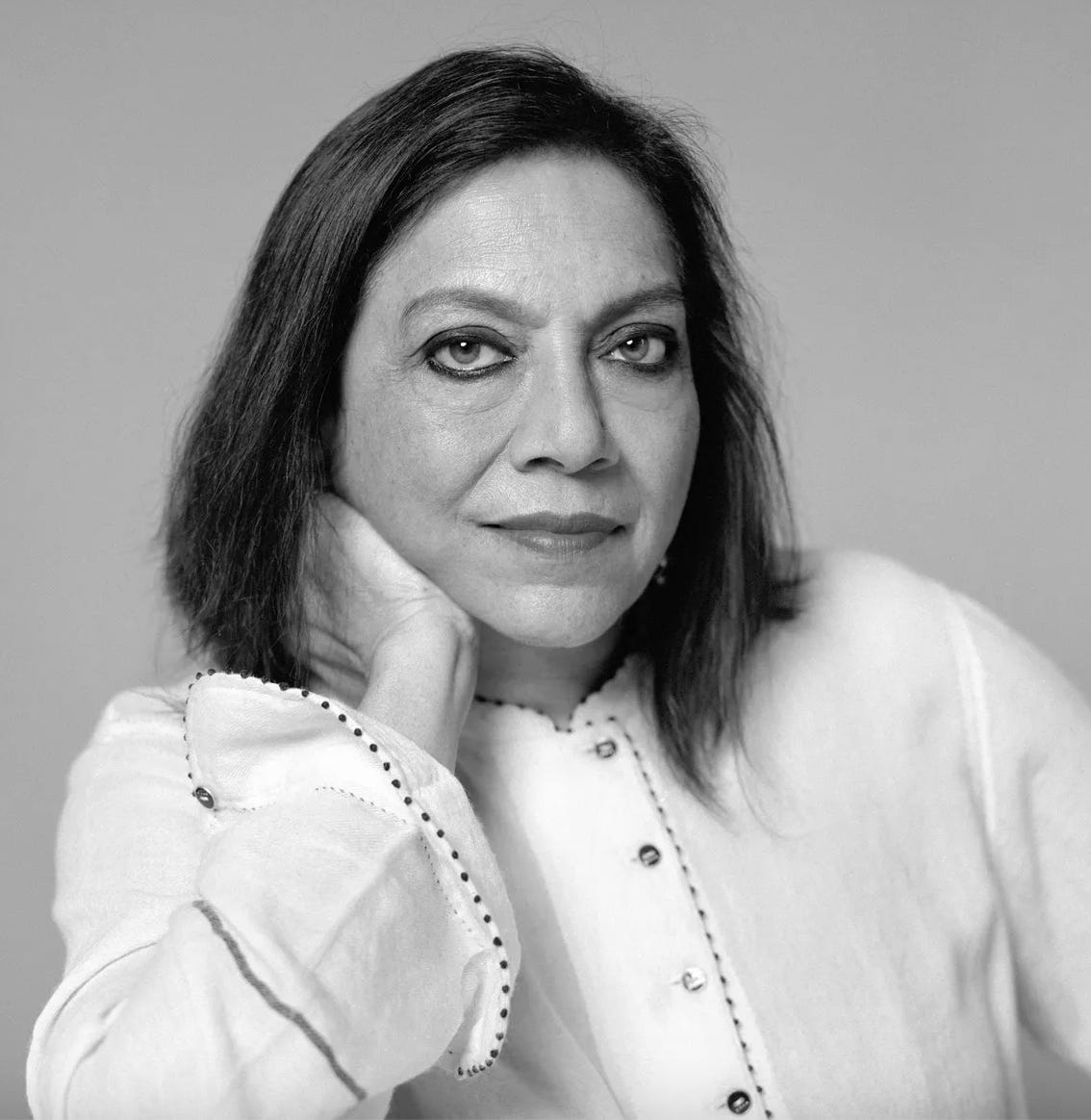
It was an unexpected assignment. In late November, I had just begun reporting a different (depressing) political story. The chance to spend time with Nair, whose work I have loved for years, came out of the blue, and I was thrilled when my editors were into it and my long-time friend and co-conspirator, the wonderful photographer Brigitte Lacombe, was able to make Nair’s photo.
When I started as a journalist, I used to write a lot about culture, film, television, music but over the years as I’ve covered politics and social movements more closely, it’s been much rarer that I’ve gotten to weigh in on art, or even celebrity, at least outside the context of … systemic sexual harassment and assault (wheeeee). I think the last magazine story I got to do that was even close to being in this category was about Katie Couric, back in 2021.
But here I was, getting to sit and watch a bunch of Mira Nair movies, including early short documentaries that I’d never seen before. (Above are links to the Criterion Collection, where you can stream a lot of her stuff, though Monsoon Wedding is frustratingly difficult to watch in the US at the moment). Just getting to settle in with my family and watch Mississippi Masala, which I hadn’t seen since I was definitely too young to understand so much of what it was about—love, sex, exile, intolerance, the expulsion of Asians from Uganda by Idi Amin—was reward enough.
I’m leaving out a crucial detail of how and why this story got to happen in the moment that it did. Because while Nair is working on a new movie, Amri, about the life of the Indo-Hungarian painter Amrita Sher-Gil, that’s in prep and won’t be in theaters for ages, and you don’t usually write about film directors until they have a film to promote. So the reason for the profile is that (as some people still don’t realize, which is a kind of delightful element of this) … New York City’s 34-year-old new mayor, Zohran Mamdani, is Mira Nair’s son.
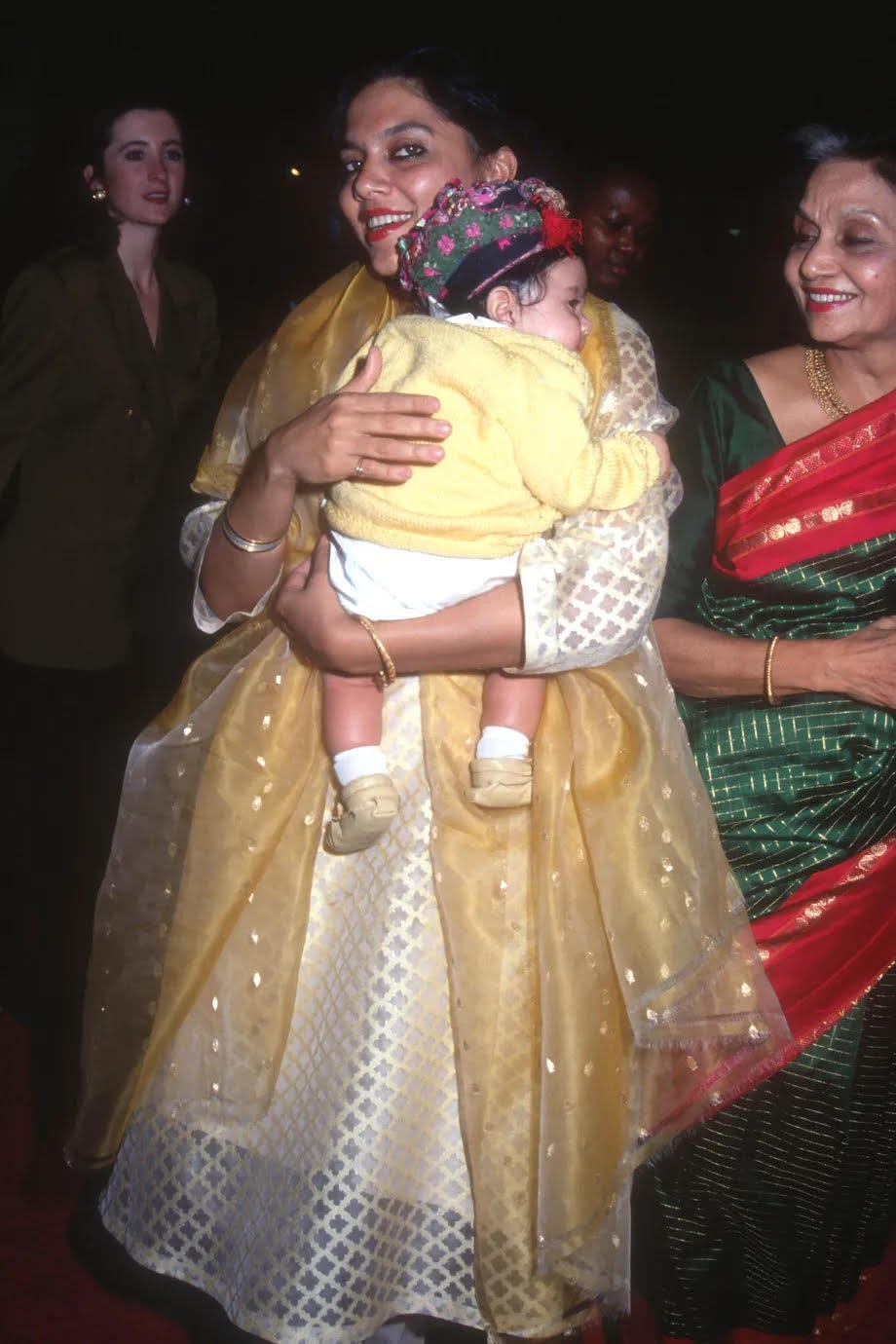
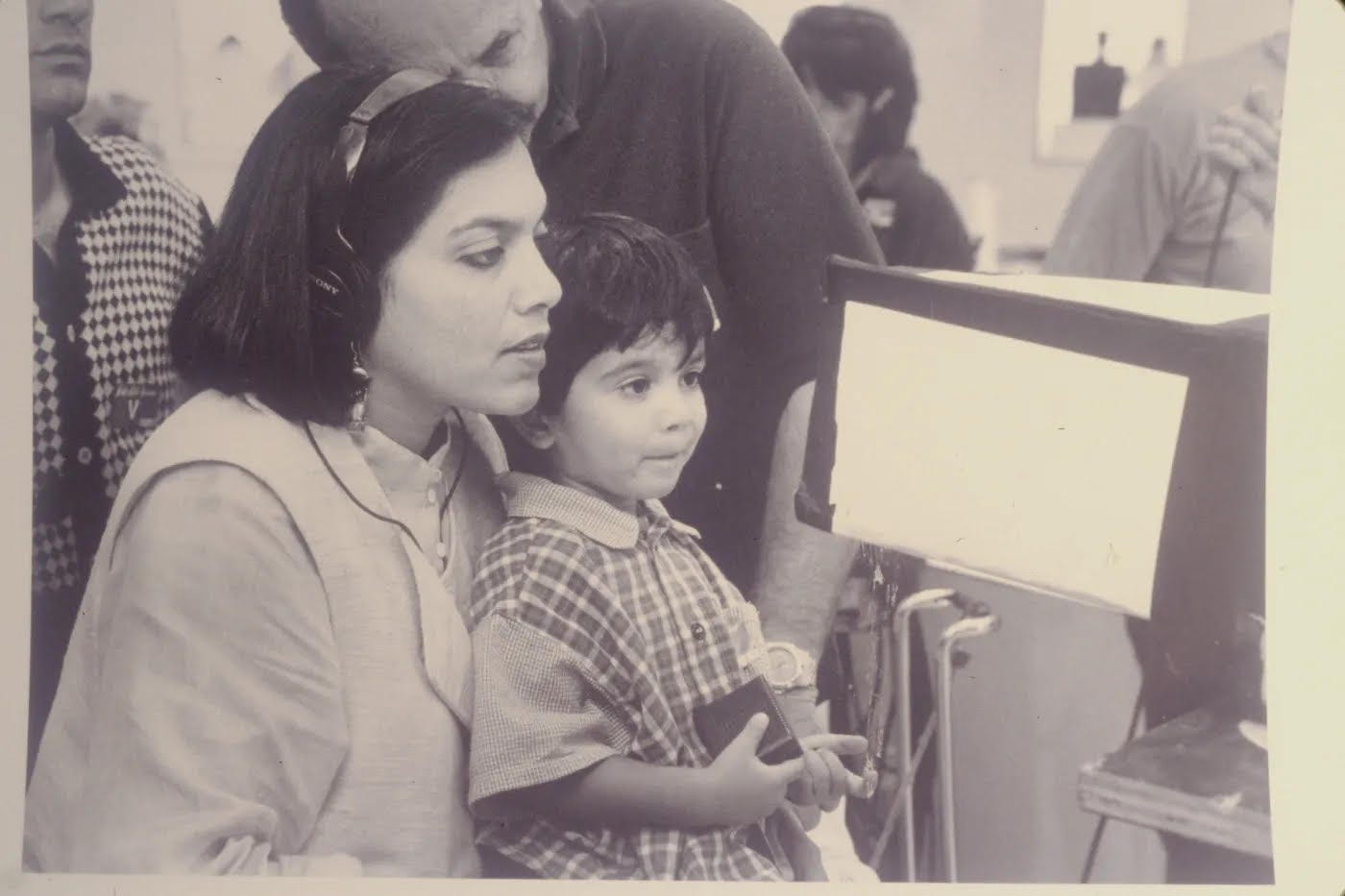
So. The piece is about a brilliant filmmaker, and also about a very proud mother, and that can be a tough balance because I never want to subsume a woman’s professional identity beneath her familial one, but this is a case in which my subject clearly wanted to talk about her relationship with her son, and wound up telling me so many frankly adorable stories about Zohran as a toddler who’d waddle down an airplane aisle looking for companions on long flights, and as a teenager who she tussled with over college decisions in a way that both mother and son were very funny and self-deprecating about. It is also a story about the logistical realities of having raised this kid while also doing her work and making her art, which means that it is a story about care, and about balance itself.
In Nair’s case, the answers entailed leaving New York City for Kampala just before her son was born. Affordability—of housing, childcare—were at the heart of Mamdani’s mayoral campaign and at the heart of his own personal origin story.
Mamdani has been explicit, in his campaign and since, about his desire to make policies that can make communities stable, and ensure that people and their families might not just survive, but flourish in New York City. This is about workers in every category, but he has been explicit about how it applies to the arts.
In December, he told a group of his supporters in the arts that he believed that “New York can be both thriving and affordable. That is the challenge of our time. Because we know that imagination and affordability are not separate forces, they are intertwined. Because New Yorkers cannot afford to take a risk, cannot afford to experiment, cannot afford to create, when it takes everything just to get by.”
In his first weeks in office, Mamdani distributed free tickets to the Under the Radar theater festival, explaining at a press conference his commitment to ensuring “that arts are not simply thought of as a luxury for the wealthy.”
This speaks directly to something I did not realize I would find when I began writing this story: the direct echoes of Nair’s work as an artist in her son’s work as a politician. They’re everywhere, but in one regard I find especially moving, at least in these very dark days:
Nair’s movies—which again, you should definitely go back and watch, soon!—tell sometimes painful and often complex stories, yet are jammed to the gills with colors and music and pleasures. So too has her son’s political project, addressing inequalities, impoverishment, and broken systems, been marked by fun and art and music and humor and joy. There was a scavenger hunt and canvassing punchcards and exuberant multi-lingual ads and he talked about the foods he loved and the music he listened to and it was ebullient and fun.
“I feel like life should be embraced,” is something that Mira told me in late December about her approach to her work, even when it’s been about the hard parts. When she said it, I reflexively thought of Rose Schneiderman, the labor and suffrage activist I’ve written about in totally different contexts, who proclaimed in 1912 that “What the woman who labors wants is the right to live, not simply exist — the right to life as the rich woman has the right to life, and the sun and music and art. The worker must have bread, but she must have roses too.”
Five days after Nair and I had that conversation about embracing the pleasures of life, Lucy Dacus sang “Bread and Roses” at Zohran’s freezing-cold inauguration and I cried (But, I mean…of course I did).

Anyway, for me, getting to write this story—in this egregiously dark time in this country—was roses. A reminder that there can be beauty and laughter and that even in a time when loving families are being pulled apart and away from their communities, the act of loving the people in your life with a riotous intensity can remain an act of resistance, of hope, and an investment in a more humane, secure and generous future.
I hope that maybe it’s that for you too: an opportunity to revisit stunning movies, and think about the insistence on making invisible people visible, and to learn about how baby Zohran used to sit in his Sassy seat in his kitchen in Kampala, kicking his legs and laughing, bringing his parents what Nair described to me, perfectly for this moment, as “cheap joy.”
I had just read the article before coming to my desk, and here you are with this beautiful story.
You did such a magnificent job of telling.
I felt so much closer to that family,. You brought us into intimate conversation and shared relatable anecdotes.
So grateful for your writing. Whatever you put your hand to is of importance to me.
I’ll take whatever joy I can get. And I saw “Monsoon Wedding” in the theaters!! “Mississippi Masala” is still my favorite, however. This is wonderful.